


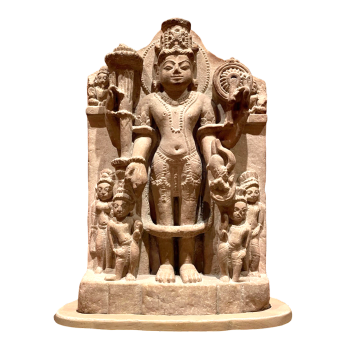
Indian statue of god Vishnu FBX model
The statue of Vishnu and his attendants, dated from the 16th century AD, is made of sandstone and originated in central India. The creator is unknown. The statue depicts a scene surrounded by the Hindu god Vishnu and his attendants, showing the loftiness and solemnity of religious art. Vishnu is one of the three main gods of Hinduism and is regarded as the maintainer of the universe.
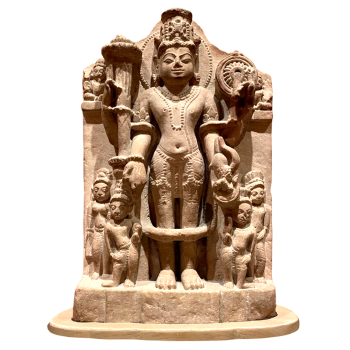
Hindu Cultural Heritage Vishnu God and Servant
This is a statue of the god Vishnu and his attendants, dated from the 16th century AD, made of sandstone and produced in central India. The creator is unknown. The statue depicts a scene surrounded by the Hindu god Vishnu and his attendants, showing the loftiness and solemnity of religious art. Vishnu is one of the three main gods of Hinduism and is regarded as the maintainer of the universe.

Cypress Tree Screen
The "Cypress Screen" is a traditional Japanese artwork, painted from the late 16th to early 17th centuries. The screen was created by the famous Japanese painter Kano Yongde. Kano Yongde was a famous painter in the Warring States Period in Japan and was famous for his unique painting style and superb skills. There are several tall cypress trees painted on the screen. The trunks and branches and leaves are all made of delicate brush strokes and thick and light ink colors, vividly showing the upright and vigorous cypress trees. The screen background is dominated by gold, creating a solemn and elegant atmosphere. Cypress is a symbol of longevity and tenacity in Japanese culture.

Cypress Screen (Wild Yongde)
Cypress Screen is a screen painting created by the famous painter Kano Yongde (1543-1590) in the Antu Taoshan period in Japan. Screen painting was originally one of a pair of large screens in Antu City, a landscape painting composed of cypress trees (I. e. cypress trees).

Ray's Vase
The "Lei vase" (Lei vase) was made around 1580 and is now in the collection of the Cernuschi Museum. This vase is famous for its unique design and exquisite craftsmanship.

Half Armor of 16th Century Germany
Half armor in 16th century Germany was a unique type of equipment, during which the design of armor underwent significant changes influenced by Italy and the Netherlands. Previously, armor emphasized elegance and thinness, but in this decade, people have begun to emphasize the existence and materiality of the human body. This new trend is particularly evident in German equipment.

Ferdinand Alvarez de Toledo Memorial Medal
Fernando Á lvarez de Toledo, the third Duke of Alvarez. The commemorative medal features a bust of the Duke in armor, made in 1567 to commemorate his tenure as governor of the Netherlands in 1557. Duke Ferdinand Alvar (1507-1582) was a Spanish nobleman, general, and politician. During the Eighty Years' War, he suppressed a rebellion against Spanish rule in the Netherlands. He served as the Governor General of Spain and the Netherlands from 1567 to 1573.
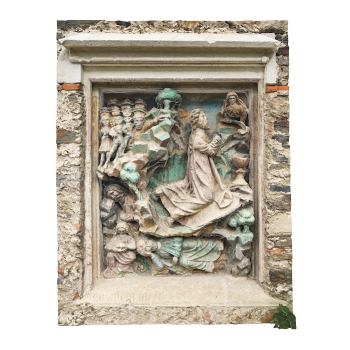
Erberg relief
The Erberg relief is a relief of the Mount of Olives on the south side of the sturdy church of St. Michael. The colorful relief depicts Christ on the Mount of Olives, whose history can be traced back to 1510.
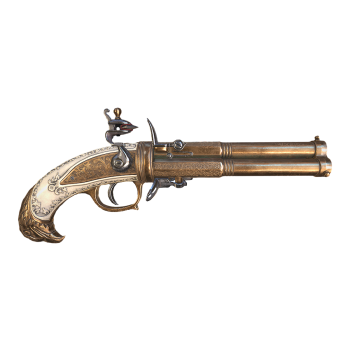
Golden Eagle three barreled flintlock gun
The flint gun was invented by Mahan, a Frenchman who was born in 1547 (the middle of the 16th century) in the family of a gunsmith, locksmith and watchmaker. It was improved on the basis of the revolver gun. The spring steel wheel was removed, a piece of flint was clamped on the jaw of the hammer, and a striking anvil was set beside the fire hole. When shooting, the trigger was pulled. Under the effect of the spring, the flint was heavily hit on the side of the fire door, and sparks came out to ignite the gunpowder. Greatly simplifies the shooting process, improves firing rate and shooting accuracy, is easy to use and cost-effective, and facilitates mass production. European armies were generally equipped with flintlock guns, which lasted for over 200 years until 1848.

The commemorative medal of the Holy Roman Empire period, the "George Gynge Medal"
The obverse of the medal features a middle-aged bearded bust of George Gynge. In 1538, he was appointed as the newly established Deputy Prime Minister of the Holy Roman Empire. Jean Baptiste was a supporter of church reform in the Catholic sense and repeatedly provided advice to King Ferdinand I on religious affairs. Since 1563, he has served as the Chief Marshal of the Court.

The sculpture of the Pacific god A'a, carved on the island of Lulutu in the Australian archipelago in the 16th century
The A'a statue on Lulutu Island is a wooden sculpture of the A'a god, made on the Pacific island of Lulutu in the Australian archipelago. The production period may have been between 1591 and 1647. In the early 19th century, this sculpture was given to the London Missionary Society by islanders to commemorate their conversion to Christianity. Afterwards, it was brought back to the UK and exhibited at the British Museum. The image of A'a is one of the best surviving works of Polynesian sculpture, and according to Julie Adams, director of the Oceanian Collection at the British Museum, in the 21st century, the sculpture is considered an "international celebrity".

Barsanet-style steel helmet at Rida Hall Gate Church in Sweden
This helmet was made in Germany, around the middle of the 16th century. It was once mistaken for a relic of King Magnus Laduras of Sweden, who died in 1290. The helmet, together with a set of armor consisting of unrelated parts, was on display in the Church of Rida Hall, Sweden, until 1866. The church is the mausoleum of the Swedish royal family and one of the oldest churches in Sweden. It is a Basarnett-style helmet, the distinctive feature is that there is a sharp mouth protruding forward in front of the mask, the main function is to deflect frontal attacks. It was more popular in Europe in the 16th and 17th centuries and was often used to equip heavily armored pistol cavalry.

Popular Models


Honey Badger (3D animated model)
192 View
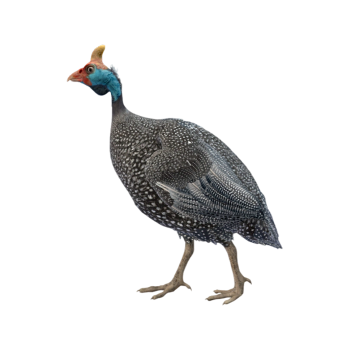
Guinea fowl (3D animated model)
163 View
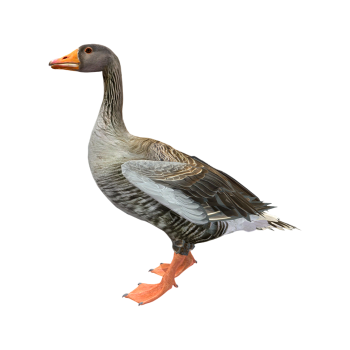
Wild Goose (3D animated model)
185 View

Red Fox (3D animated model)
153 View
Random Model

Edmonton Dragon (3D animated model)
152 View
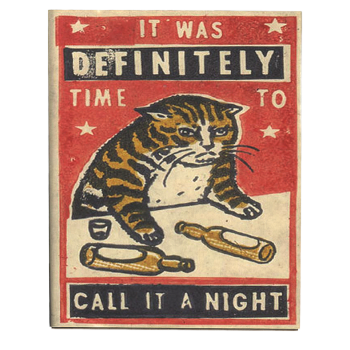
80 s European matchbox
713 View

80 s Vintage White Oven
750 View

European spruce (Norway spruce)
472 View

Almond Poppy Seed Muffins
888 View

Tea set on wooden pallet
390 View

Watts 2101 Sport Edition
969 View

Sagu Chicken Dinner Package
880 View

BMW M5 CS Luxury Sedan
894 View

A piece of daisy
528 View